ISO 27001 Certification in Australia: A Straightforward Guide for First Time Applicants

ISO/IEC 27001:2022 is the current international standard for establishing, implementing, maintaining, and continually improving an Information Security Management System (ISMS). For Australian organisations, it provides a structured way to manage information security risk across people, processes, and technology, and it can support trust in enterprise procurement and security reviews.
What is ISO 27001 certification?
ISO 27001 certification indicates that an organisation has implemented a comprehensive system for managing information security risks. Unlike simple technical fixes, the 27001 standard focuses on a holistic approach to security governance.
ISO 27001 certification means an accredited certification body has assessed your ISMS against ISO/IEC 27001:2022 requirements. In practice, most organisations complete a gap assessment first, then undergo the formal certification audit once the ISMS is ready. ISO 27001 certification is typically valid for three years, with surveillance audits during that period and a recertification audit at the end of the cycle.
Why Australian businesses prioritise the 27001 standard
While ISO 27001 certification is not legally required for most Australian businesses, it is often requested in enterprise and government procurement. It also supports broader security and privacy governance, but it does not replace obligations under the Privacy Act 1988, the Notifiable Data Breaches scheme, or APRA CPS 234 where those apply. For APRA-regulated entities, ISO 27001 can help support CPS 234 implementation, but it is not a substitute for APRA requirements. The Essential Eight is an ASD-backed set of mitigation strategies and is often used as a technical baseline in Australian environments, while ISO 27001 provides the broader ISMS governance framework.
Navigating the ISO 27001 certification journey in Australia
The path to ISO 27001 audit and certification involves several stages, moving from audit readiness to a formal external audit. Some organisations use consultants to conduct a gap assessment, which helps identify gaps between current security measures and the formal ISO 27001 requirements.
Once the organisation is ready, the external audit is conducted by a JAS-ANZ accredited certification body, which objectively assesses the ISMS against ISO 27001 requirements and determines whether certification can be granted.
Understanding the stage 1 and stage 2 audit
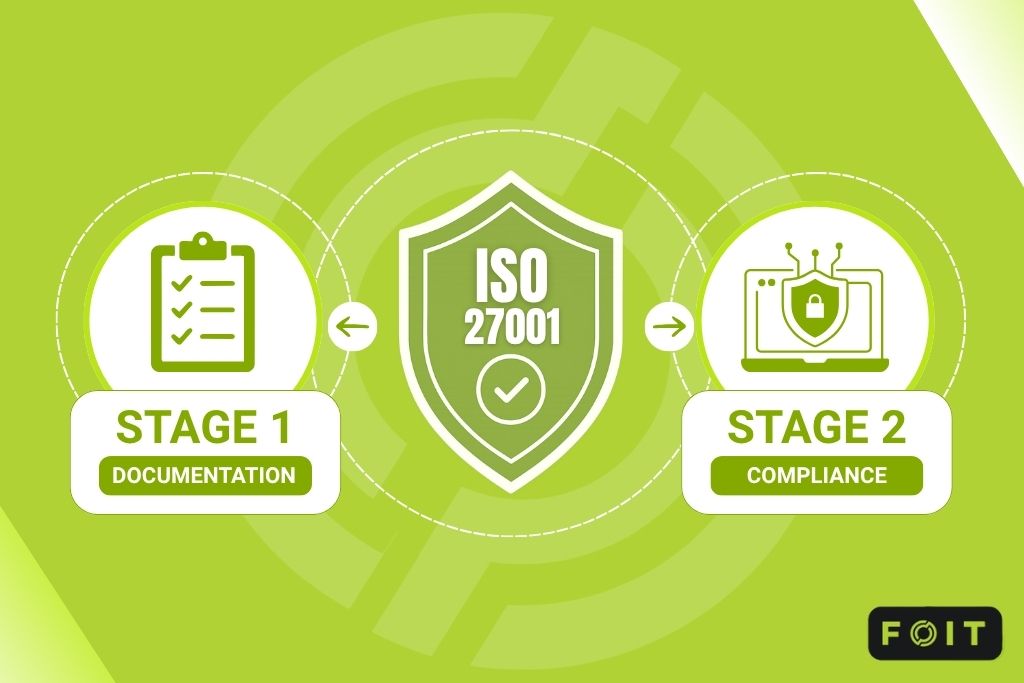
The certification audit is split into two parts:
- Stage 1: This is a readiness review of the ISMS scope, documentation, and preparedness, where the auditor evaluates whether the organisation is ready for the full assessment.
- Stage 2 Audit: This is the evidence-based audit where the auditor verifies that the ISMS is implemented and operating effectively.
27001 certification is granted when the Stage 2 audit is successful and required nonconformities are closed out according to the certification bodies’ processes.
The role of internal audit and risk management
Before the final certification audit, organisations should complete internal audits and management review to confirm the ISMS is working as intended and is ready for external assessment.
OAIC data showed that the office received 595 notifications in the July to December 2024 reporting period, and malicious or criminal attacks accounted for 69% of those notifications, underscoring the importance of a strong risk management process within an ISMS.
Estimated costs and certification lifecycle
In Australia, ISO 27001 certification costs vary widely based on scope, staff size, maturity, and whether consulting support is used. As an indicative guide, many organisations should expect total costs from about AUD 15,000 to AUD 80,000+, with surveillance audits charged separately.
For many Australian organisations, the certification journey takes roughly 3 to 12 months depending on readiness, scope, and resourcing.
Comparing related services
ISO 27001 is an information security management system standard focused on security governance and risk management. SOC 2 is a control-based trust report often requested by US customers and partners. Penetration testing is a technical security assessment used to identify exploitable weaknesses in systems and applications.
Maintaining your certification lifecycle
Following initial certification, surveillance audits are typically conducted annually during the three-year certification cycle to confirm that the ISMS remains effective and certification stays current.
Addressing nonconformity and surveillance
If a surveillance audit identifies a nonconformity, the organisation must address it within the required timeframe to maintain certification.
Every three years, a recertification audit is required to renew certification for the next cycle.
Strategic support for your 27001 certification
Our approach at FOIT Group treats the certification lifecycle as a continuous growth of your business maturity. Many Australian organisations encounter challenges with audit readiness, gap assessment, and managing Information Security requirements while maintaining day-to-day operations. Embedding security governance into core business processes from the start can help reduce compliance gaps and support long-term resilience.
By providing a managed engagement from gap assessment through to certification, we help organisations meet ISO 27001 requirements without the need to coordinate multiple vendors. Whether you are navigating APRA CPS 234, improving your Essential Eight standing, or preparing for enterprise procurement requirements, we provide managed compliance services and ongoing support throughout your partner certification journey.
Frequently asked questions
How long is an ISO 27001 certification valid for in Australia?
An ISO 27001 certification is valid for a three-year period. During this time, the organisation must undergo annual surveillance audits to ensure the ISMS remains effective. After every three years, a recertification audit is required.
What are the mandatory 27001 requirements for documentation?
The exact documentation set depends on your ISMS scope, but organisations generally need the ISMS scope, information security policy, risk assessment and treatment records, the Statement of Applicability, internal audit evidence, management review outputs, and corrective action records.
Can small organisations get ISO 27001 certification in Australia?
Yes, small organisations can achieve ISO 27001 certification by scaling the ISMS to suit their size, risk profile, and scope. Many smaller teams narrow the initial scope to keep implementation practical and cost-effective while still meeting certification requirements.
What is the difference between ISO 27001 and the Essential Eight?
ISO 27001 is an international management system standard, while the Essential Eight is an ASD-backed set of mitigation strategies used as a technical baseline in many Australian security programs. ISO 27001 governs security management and governance, while the Essential Eight focuses on specific technical controls.
Do I need a consultant for ISO 27001 certification in Australia?
Consultants are not required for ISO 27001 certification, but many organisations use them to accelerate gap assessments, documentation, and audit readiness. They can reduce internal workload and help avoid avoidable nonconformities before the formal audit.
How much does an ISO 27001 surveillance audit cost?
Annual surveillance audit fees vary depending on organisation size, scope, and the certification body. As an indicative guide, many Australian organisations should expect surveillance audits to be priced separately from initial certification.
What happens if my business fails an ISO 27001 audit?
If the auditor identifies major nonconformities, certification will not be granted until those issues are remediated and verified. Minor nonconformities may be closed out within the timeframe allowed by the certification body’s process.
Is ISO 27001 mandatory for Australian government tenders?
ISO 27001 is sometimes requested in Australian government and enterprise tenders, especially where information security is a procurement concern, but it is not universally mandatory across all public-sector opportunities.