Network Security Assessment Checklist for Security Audits and Reviews

A network security assessment checklist helps organisations evaluate infrastructure, identify vulnerabilities, and improve security posture. Many organisations include it within a broader IT security assessment checklist to review systems and cyber risk.
For organisations conducting a network security audit in Australia, structured assessments help strengthen cybersecurity defences against evolving threats.
Cyber threats continue to increase across organisations worldwide. According to the 2024 IBM Cost of a Data Breach Report, the average global data breach cost reached USD $4.88 million, the highest level recorded to date. This growing financial impact underscores the importance of routine network security assessments to identify vulnerabilities early and reduce cyber risk.
The checklist below outlines key areas organisations should review when performing a network security assessment.
Network security assessment checklist
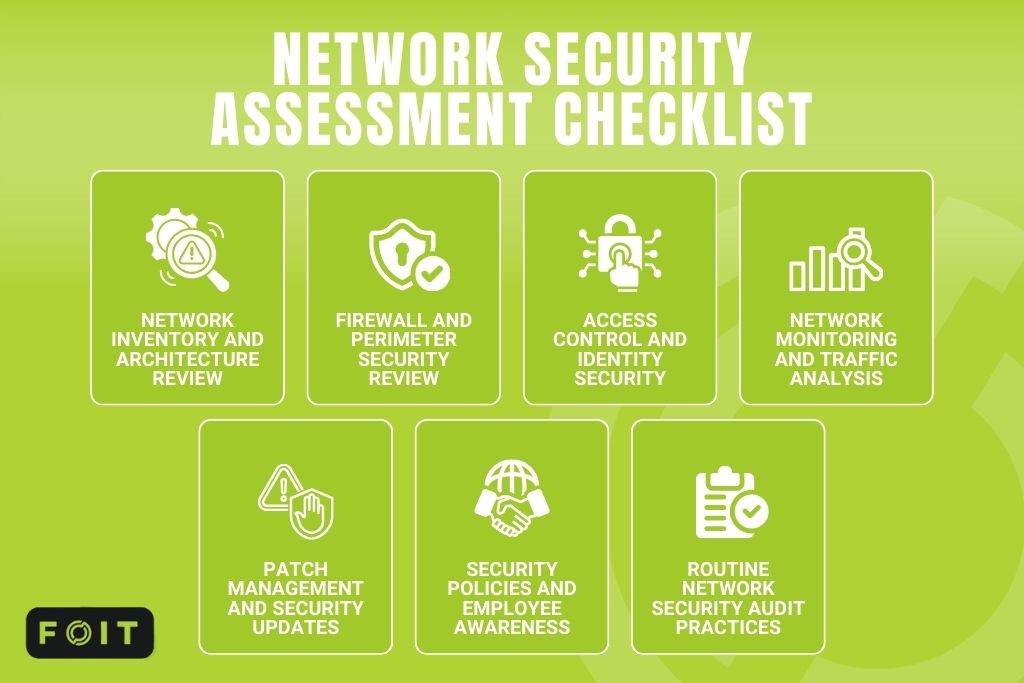
A network security assessment checklist helps organisations review key areas of their network environment before conducting a full security audit. As part of a broader cybersecurity approach, it helps security teams identify vulnerabilities, verify that security controls are working as intended, and ensure systems and infrastructure remain properly protected.
The checklist below highlights the main areas typically reviewed during a network security assessment.
Network inventory and architecture review
Maintain a complete inventory of all network devices and systems, including servers, routers, switches, firewalls, endpoint devices, and cloud infrastructure. Reviewing the network architecture and segmentation helps ensure sensitive environments are properly isolated and unnecessary internal connections are reduced.
Firewall and perimeter security review
Evaluate firewall configurations, access rules, open ports, and exposed services to ensure external entry points are properly secured. Strong perimeter controls help protect the network from unauthorised access and external cyber threats.
Access control and identity security
Review user permissions, privileged accounts, and authentication policies to confirm that only authorised users can access systems and sensitive data. Effective identity management reduces the risk of unauthorised access and privilege misuse.
Network monitoring and traffic analysis
Monitor network traffic to detect unusual activity such as abnormal spikes, suspicious connections, or unexpected data transfers. Continuous monitoring helps security teams identify potential threats early and respond quickly.
Patch management and system security updates
Ensure operating systems, firmware, and applications receive regular security updates. Keeping systems patched helps address known vulnerabilities and maintain a secure network environment.
Security policies and employee cybersecurity awareness
Review internal security policies and ensure employees receive cybersecurity awareness training. Informed staff and clear policies help reduce risks associated with phishing, social engineering, and other human-targeted attacks.
Routine network security audit practices
Conduct regular network security assessments to identify vulnerabilities and review security controls as systems evolve. Routine audits help organisations maintain consistent cybersecurity practices and strengthen their overall security posture.
Why regular network security assessments matter
Cyber threats continue to evolve as organisations expand cloud infrastructure, remote work environments, and interconnected systems. Regular network security assessments help ensure existing security controls remain effective and aligned with current risk levels.
By identifying vulnerabilities early, organisations can strengthen their security posture, reduce breach likelihood, and maintain compliance with recognised security frameworks such as the NIST Cybersecurity Framework.
When to conduct a network security assessment
Network security assessments should not be treated as a one-time activity. Instead, organisations should schedule regular reviews to maintain strong security practices.
Common situations that require an assessment include:
- After major infrastructure changes
- Before compliance audits
- Following a cybersecurity incident
- When adopting new cloud or remote work systems
Routine assessments help organisations adapt to emerging threats.
Challenges of conducting a network security assessment
Conducting a network security assessment can be challenging, especially in modern IT environments that combine on-premise systems, cloud platforms, and remote access networks. Maintaining full visibility across all assets can be difficult as new devices, applications, and services are added, increasing the risk that some systems may be overlooked during security reviews.
Organisations may also face challenges when managing user access, keeping systems updated, and allocating enough time or expertise for thorough assessments. Regularly reviewing permissions, applying security patches, and monitoring network activity requires ongoing effort, particularly for internal IT teams responsible for large or complex environments.
Improve network security with expert insight
While internal IT teams can carry out initial reviews using a network security assessment framework, many organisations gain greater value by partnering with cybersecurity professionals who deliver in-depth security assessments.
Independent security experts can identify deeper vulnerabilities, perform advanced security analysis, and recommend improvements tailored to complex network environments.
If you want to better understand how professional network security assessments are conducted, we encourage you to review resources from FOIT, where we outline practical approaches to strengthening network security and managing cyber risks across modern business infrastructure.
Frequently asked questions
How often should a business perform a network security assessment?
Most organisations should conduct a network security assessment at least once a year. Businesses with higher risk environments may perform assessments quarterly or after major infrastructure changes or cybersecurity incidents.
What are the first steps in conducting a network security audit?
The first step is creating a complete inventory of network assets, including servers, routers, firewalls, endpoints, and cloud systems. Once documented, security teams can review network architecture and system communication.
What tools are commonly used for network security assessments?
Common tools include Nmap for network discovery, Nessus and OpenVAS for vulnerability scanning, and Wireshark for analysing network traffic and identifying suspicious activity.
Why is network segmentation important for security assessments?
Network segmentation limits the spread of cyber threats by separating sensitive systems from general network traffic. This reduces the risk of attackers moving across the network after gaining access.
Can small businesses benefit from a network security audit?
Yes. Cybercriminals often target small businesses because they may have fewer security controls. Regular network security audits help identify vulnerabilities early and improve cybersecurity. Using a structured cybersecurity checklist for small businesses can also help organisations review essential security protections, even with limited IT resources.
What risks can a network security assessment identify?
A network security assessment can identify risks such as misconfigured firewalls, outdated software, weak access controls, and insecure remote connections.
When should an organisation conduct an additional security assessment?
Additional assessments should occur after infrastructure upgrades, new cloud deployments, mergers, remote access changes, or cybersecurity incidents.
What role do employees play in network security?
Employees help strengthen network security by recognising phishing emails, suspicious links, and malicious attachments. Security awareness training helps staff identify and report potential cyber threats.